When is the Right Time to Migrate Your Business Systems?
Understanding Business Systems Migration
Business systems migration refers to the process of moving data, applications, and other business functions from one system to another. This transition can take various forms, including upgrading to new software, transitioning from on-premises infrastructure to cloud-based solutions, or migrating data from outdated legacy systems to more modern and efficient platforms. For small businesses and SMEs, this concept is particularly relevant as they often seek to enhance operational efficiency while maintaining cost-effectiveness.
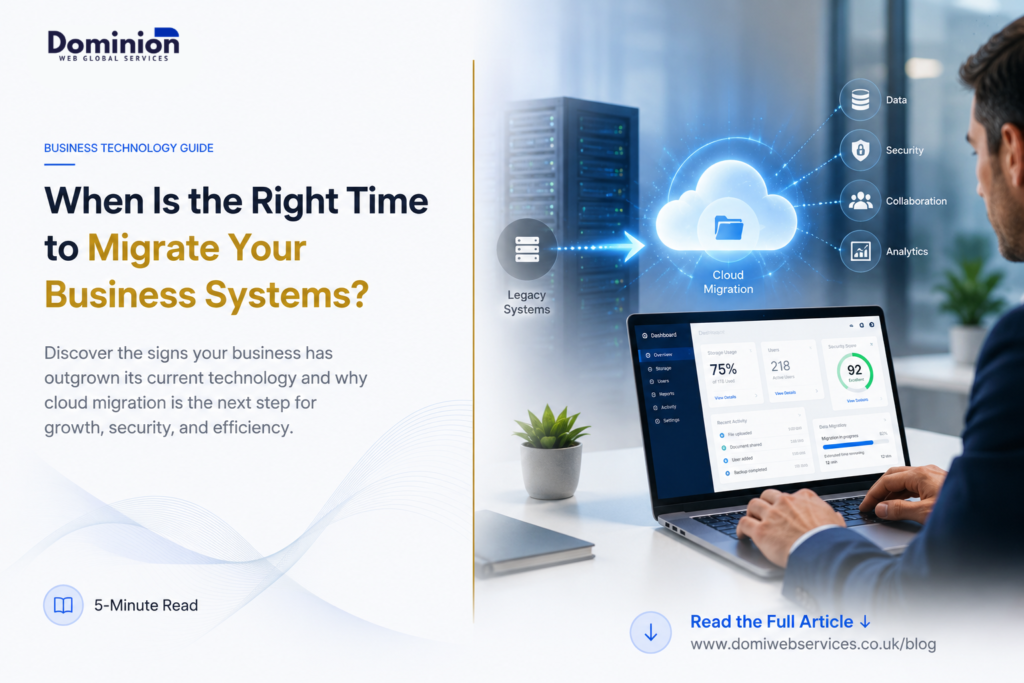
There are several types of business systems migration that organizations may consider. One common type involves shifting operations from traditional on-site servers to cloud environments. This not only reduces the need for physical hardware but also offers scalability, improved collaboration among staff, and enhanced security features. Conversely, some businesses might need to migrate data from older computer systems that can no longer support their operational requirements. In such cases, adopting current technologies becomes essential for sustaining growth.
Businesses may pursue migration for a variety of reasons. As technology evolves, the limitations of legacy systems become increasingly apparent. These outdated systems often pose challenges such as decreased performance, higher maintenance costs, and limited integration capabilities with modern applications. Consequently, migrating to updated solutions can provide substantial benefits, including streamlined processes, better data analytics, and improved customer service capabilities.
In essence, understanding what business systems migration entails is imperative for any organization contemplating such a change. It enables businesses to assess their individual needs and to explore the numerous possibilities that modern technology offers for competitive advantage. As businesses increasingly rely on technology to meet their objectives, recognizing the importance and implications of migrating systems becomes a vital part of strategic planning.
7 Warning Signs Your Business Has Outgrown Its Current Systems
Many businesses encounter a range of indicators that suggest it may be time to migrate their business systems. Recognizing these signs can be crucial for systematic planning and timely upgrades.
One prominent sign is the presence of inefficient processes. If tasks that were once straightforward now require excessive time and effort, it indicates that your current systems may not support your operations adequately. Employees may spend more time navigating outdated procedures than focusing on productive activities, leading to frustration and decreased output.
Frequent system crashes are another warning sign that businesses should not ignore. When systems fails repeatedly, it creates interruptions that hinder workflow and can affect customer satisfaction. Such instability may not only result from hardware issues but also from incompatible software that fails to scale with the business’s growth.
Difficulties with data access represent another clear indicator that a system change is necessary. If employees struggle to retrieve or utilize essential data, it impacts decision-making processes. In an increasingly data-driven environment, the inability to access information can stall productivity and result in poor strategic choices.
Reliance on outdated software may also be telling of a system that has outlived its effectiveness. Many business applications evolve to meet the demands of modern users, and sticking with antiquated systems can stifle innovation. Outdated software may be prone to security vulnerabilities, making it critical to consider migration to protect valuable business data.
Additionally, poor user experience and feedback offer insights into how current systems are perceived by staff. If team members consistently express dissatisfaction with software tools, it is essential to evaluate whether these tools can adequately support your current operations. Addressing employee concerns can lead to enhanced morale and productivity.
Overall, being aware of these warning signs can guide your business toward recognizing the necessity to upgrade systems effectively. Acknowledging the challenges associated with current operations can lead to better decision-making and ultimately foster growth.
The Hidden Costs of Delaying a Systems Migration
In today’s fast-paced business environment, the reluctance to migrate outdated systems can lead to significant hidden costs. When organizations postpone the necessary updates to their business systems, they often unwittingly welcome a series of negative ramifications affecting productivity, operational expenses, security, and customer satisfaction.
One of the primary consequences of delaying a systems migration is the loss of productivity among employees. Outdated systems tend to be slower and less efficient, causing employees to expend extra time on their tasks. For instance, a manufacturing company that still relies on paper-based processes may experience significant delays in production timelines, as employees spend unnecessary hours searching for documentation or rectifying errors associated with outdated technology.
Moreover, postponing migration can lead to increased operational costs. Continuing to maintain an aging infrastructure often requires costly repairs, frequent upgrades, and inefficiencies that can compound over time. For example, a retail company that continues utilizing an obsolete point-of-sale system may find itself facing persistent downtime, hindering transactions and ultimately resulting in lost revenue.
Another critical aspect is security; old systems are generally more vulnerable to breaches due to outdated protocols and a lack of support from vendors. Companies may unknowingly expose sensitive customer information, risking not only financial loss but also significant damage to brand reputation, which can take years to rebuild.
Furthermore, the delay in upgrading business systems can lead to negative customer experiences. Modern consumers expect seamless service, and they may choose competitors who utilize more sophisticated and responsive technologies. For example, businesses relying on outdated systems may struggle to manage inventories effectively or implement loyalty programs that enhance customer engagement.
Through analysis of case studies from various sectors, it is evident that the long-term impact of delaying a systems migration far outweighs the initial cost and effort associated with modernization. Investing in updated business systems not only enhances efficiency but ultimately paves the way for future growth.
Key Benefits of Migrating to Modern, Cloud-Based Systems
As businesses continuously seek to enhance their operations, migrating to modern, cloud-based systems presents several compelling benefits that can significantly transform business processes. One of the primary advantages of such migration is enhanced efficiency. Cloud-based platforms often utilize automation tools that streamline various tasks, enabling employees to focus on more strategic initiatives. This improvement in efficiency can result in higher productivity levels and ultimately contribute to improved organizational performance.
Another vital benefit is improved collaboration among team members. Cloud-based solutions facilitate real-time sharing and access to information, irrespective of geographical constraints. This capability allows teams to work collaboratively on projects, share files, and communicate effectively through integrated tools. Such collaborative environments not only foster innovation but also enhance team cohesion, leading to better overall output.
Scalability is another strategic advantage offered by cloud technologies. Businesses can easily scale their resources up or down based on demand without worrying about the limitations that come with traditional hardware solutions. As companies grow, cloud systems can seamlessly accommodate increasing workloads, ensuring that operations remain uninterrupted.
Access to real-time data is critical in today’s fast-paced business environment, and cloud systems provide just that. With instant access to analytics and insights, businesses can make informed decisions promptly, adjusting their strategies according to current market demands.
Moreover, cloud-based platforms simplify the process of updates and maintenance, allowing organizations to implement improvements with minimal disruptions. Enhanced data security measures provided by cloud vendors also help safeguard sensitive information, which is crucial in today’s digital landscape. Additionally, migrating to these systems can lead to cost reductions in the long term, as businesses can optimize their operational expenditures by only paying for the resources they use. Ultimately, the migration to modern, cloud-based systems offers numerous benefits that can profoundly impact business operations positively.